



Wayne Olivier, Business Development Manager, on Staying Focused in the Field — and Never Losing a Detail

Wayne Olivier, Business Development Manager, stainless steel distribution
Wayne Olivier doesn't sit at a desk when he works.
As a Business Development Manager in stainless steel distribution, his days are built around movement: client visits at their premises, boardroom meetings, video conferences, site calls in loud industrial environments. His job is to find new business, build relationships, and turn conversations into transactions. Every meeting is a potential opportunity. Every detail missed is a potential deal lost.
"I will have meetings with clients at their premises or our company office," he says. "May also have conference and boardroom meetings in person or via video conference calls. I would do in-depth research on future prospective clients prior to meeting with them."
For a long time, that research and those meetings produced something Wayne had to manually manage: pages of notes, partial recollections, and the constant effort of staying both present with a client and accurate enough to report back to C-suite management. It worked, but it divided his attention at exactly the moment when undivided attention was the point.
The problem with taking notes while you're trying to listen
In business development, the meeting isn't just about exchanging information. It's about reading the room — noticing hesitation, hearing what's behind the question, staying attuned to what the client actually needs rather than what they're explicitly asking for.
Manual note-taking makes that harder. Every time you break eye contact to write something down, you're signaling that you're not fully there. And every note you take is a moment when you're not fully listening.
"Keeping attention on the client whilst taking notes" — Wayne names this as one of his core daily challenges. It's a constraint that shapes everything about how field-based professionals work.
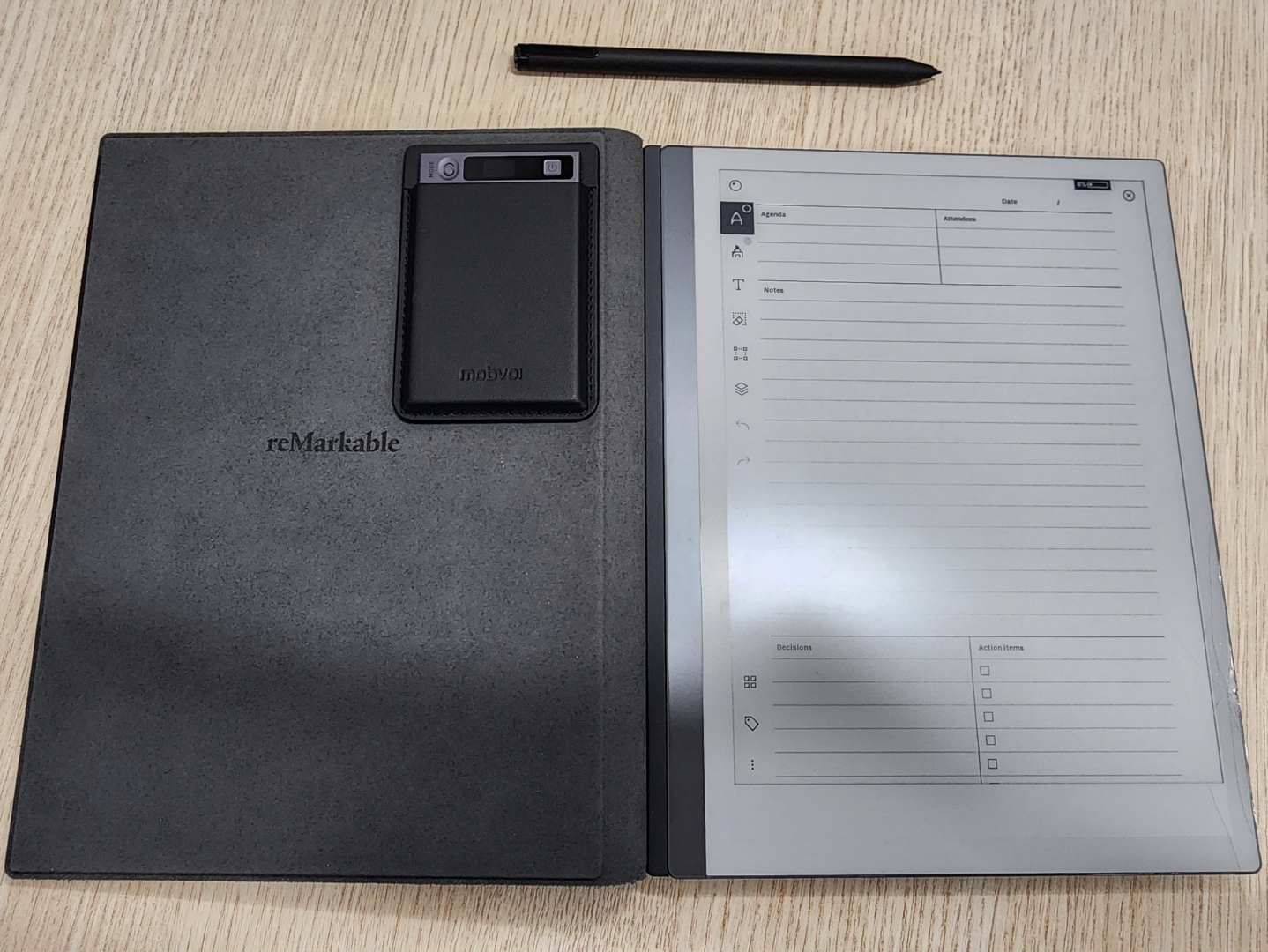
The reMarkable tablet Wayne used before TicNote — a structured but manual approach to capturing meeting details
He found TicNote through a YouTube review. What stood out wasn't just the transcription quality — it was a specific capability: it worked reliably in loud on-site environments. For someone spending time in industrial settings, that distinction matters enormously. A tool that only works in quiet boardrooms is a tool that fails exactly when you need it most.
"It was the best AI recorder notetaker in loud on-site environments," he says. "Shadow AI function for reporting, research, finding existing note details and AHA information insight."
What changed in the field
The shift in Wayne's daily work was immediate and structural.
He uses TicNote to capture client visits and then generate the sales call reports that go back to senior management. The output — summaries organized clearly, consistently formatted, ready to present — replaced a process that used to require significant time after every meeting.
"I had multiple call reports and meetings to report back on to C suite management," he says. "It saved me time and made the reports layout in a proactive professional intuitive manner."
But the more important change was what happened during the meetings themselves. Not taking notes meant Wayne could stay focused — on the client, on the conversation, on the signals that matter in a sales context.
"More confidence in managing my time," he says. "Allows me to remain in a more focused mannerism in front of clients, without being distracted by taking manual written notes."
That confidence isn't incidental. In business development, the way you show up in front of a client is itself part of the product. A manager who is fully present, engaged, asking the right follow-up questions at the right moment — that's a professional who inspires confidence. It translates directly into the relationship, and eventually, into the deal.
The downstream value
Wayne frames the value of TicNote simply: it frees up time to focus on what actually generates revenue.
"Yes, frees up time to be more focused on finding new business opportunities," he says.
In business development, time is the only non-renewable input. Every hour spent reconstructing notes, writing up call reports from memory, or trying to remember what was agreed in a meeting three days ago is an hour not spent prospecting, researching, or building the next relationship.
TicNote doesn't replace that work. It clears the path for it.
Wayne Olivier is a Business Development Manager in stainless steel distribution. He uses TicNote to capture client visits and on-site meetings, generate C-suite sales call reports, and stay fully present in front of clients.
