



Jens Marticke, primary school teacher, on what happens when you no longer have to be the listener, the observer, and the note-taker all at the same time
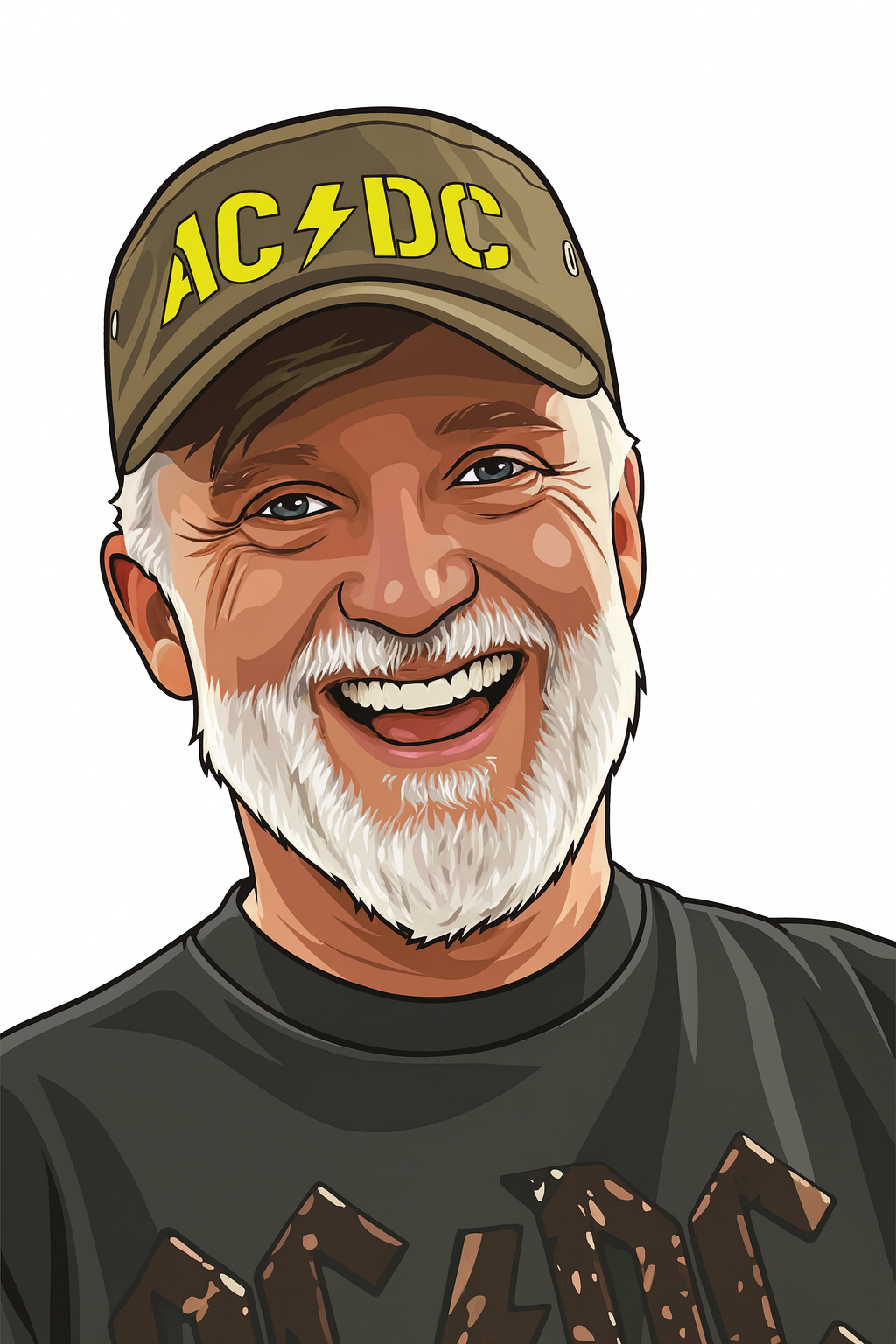
Jens Marticke, primary school teacher, Germany (illustrated portrait)
Jens Marticke's job requires an unusual kind of split attention.
As a teacher at Grundschule Hirschfeld, a primary school in Germany, his meetings aren't straightforward information exchanges. When a conference involves a student, Jens has to do at least three things simultaneously: engage with the student, read the emotional signals coming from the parents, and produce an objective written record of the discussion. Not one of these tasks can be done halfway.
"In a meeting, I have to engage with the students, pick up on how the parents are feeling, and still take objective minutes," he says. "I can't forget anything and I always have to draw the right conclusions and respond accordingly."
That's a demanding combination under any circumstances. In a room with a child, a parent, and a set of issues that require careful handling, the cognitive load of note-taking isn't just inconvenient — it actively competes with the human attentiveness the job demands.
Notes, notes, notes — and then react
Jens describes his daily tasks with a kind of dry precision: "Notes, notes, notes — and then react accordingly."
It sounds simple. But the challenge is that note-taking and reacting are cognitively opposed activities. The moment you write something down, you've already partially disengaged from what's happening next. In a fast-moving meeting where information is coming in quickly — what he calls situations "where information just rains down on you" — the gap between writing and listening becomes a real problem.
He found TicNote through YouTube. The promise was straightforward: let the device handle the recording so that you can be present for the conversation.

The scholar at rest — Jens approaches meetings the same way: fully present, ready to listen, not scrambling to write
What changed
The change Jens describes is simple and immediate: more relaxation, and through that, better concentration.
"Mehr Entspannung und dadurch bessere Konzentration," he says — more relaxation and therefore better focus. He applies the same phrase both to what TicNote does for him personally and to what he believes it could offer others in similar roles.
It's a quiet kind of value, but a significant one. Relaxation in a professional context isn't about comfort — it's about cognitive capacity. When you're not spending mental energy on capturing information, you have more available for processing it, responding to it, and doing the actual work the meeting requires.
The features he relies on most are summary and transcription — the core workflow of record, then review, then act.
A note on this story
Jens responded to the interview in German, which is where he works and thinks. His answers have been translated for this post. The clarity of what he describes, however, doesn't require translation: the problem of being a professional who must simultaneously observe, participate, and document is universal — and so is the relief of no longer having to do all three at once.
Jens Marticke is a teacher at Grundschule Hirschfeld in Germany. He uses TicNote to capture school meetings so he can stay fully present with students and parents, and rely on accurate transcripts rather than divided attention.
